How Ship Type Affects the Document of Compliance (DOC): A Practical Guide for New Shipping Companies

Updated: Feb 25
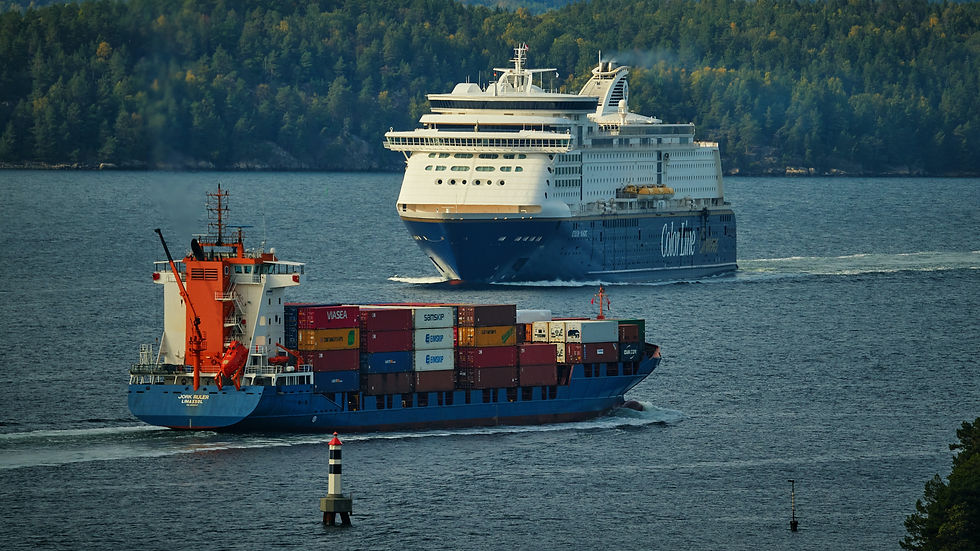
ISM Code states in its section 13.1 that "the ship should be operated by a company which has been issued with a Document of Compliance or with an Interim Document of Compliance, relevant to that ship", meaning that if one is planning on starting a shipping company, or perhaps expanding their existing operations to new type of vessel(s), one of the first things to consider is how to acquire the Document of Compliance (DOC).
When company applies for a Document of Compliance under the ISM Code, the Administration or Recognized Organization on behalf of the Administration will want to know which type of vessel are we dealing with. This is not an administrative detail. It is the core determinant of how your Safety Management System (SMS) must be designed, which competencies and resources the company must demonstrate, what the auditor will examine, and what will appear on the actual Document of Compliance, since the DOC will only be issued, and only be valid for the "particular ship type explicitly indicated in the document" (ISM Code, Part B, §13.3).
But what exactly is a “ship type”?
Where do these categories come from?
And how do they influence SMS development and DOC approval?
Let’s break it down clearly.
1. What Does “Ship Type” Mean for ISM Purposes?
The ISM Code itself does not define ship types. Instead, ship types used for DOC certification come from SOLAS definitions and the IMO Codes integrated into SOLAS, such as:
SOLAS Chapter I/2 (passenger ship, cargo ship, tanker)
SOLAS XII/1 (bulk carrier)
IBC Code (chemical tankers)
IGC Code (gas carriers)
HSC Code (high-speed craft)
SPS Code (special purpose ships)
MODU Code (mobile offshore units)
Flag States and Recognized Organizations (ROs) then group these into the practical ship-type categories listed on a DOC:
Passenger ship
Ro-Ro passenger ship (Ro-Pax)
Ro-Ro cargo ship
General cargo ship
Bulk carrier
Oil tanker
Chemical tanker
Gas carrier
High-speed craft
Special purpose ship
Mobile offshore unit
Each of these ship types carries its own operational profile, statutory requirements, and risk exposure, which is why the auditor must confirm that the company’s SMS matches the chosen ship type.
2. Why Ship Type Matters When Applying for a DOC
The ship type you select determines:
a. SMS structure and content
The SMS must address:
the operational risks,
the regulatory framework,
the manning and competencies, and
the emergency preparedness
specific to that ship type.
A generic SMS cannot pass a DOC audit for a specialised vessel like a tanker or Ro-Ro.
b. The auditor’s checklist and focus areas
Auditors apply ship-type-specific ISM interpretations: A Ro-Ro operator will be audited on lashing procedures and watertight integrity, while a tanker operator will be assessed on cargo transfer, inert gas operations, VOC control, and tank entry safety.
c. Training and competence requirements
Ship type drives training requirements under STCW:
Tanker familiarization
Chemical/gas tanker endorsements
Passenger ship crowd management
High-speed craft type-rating
d. Operational readiness before SMC
For the ship to get its Safety Management Certificate (SMC), it must be operated safely as per its type. This means drills, maintenance, manuals, and crew familiarization must all align with the declared ship type on the company’s DOC.
3. How Ship Type Affects SMS Development
Below is a practical breakdown of how different ship types shape the SMS.
A. Cargo Ships / General Cargo
These vessels fall under the broadest category.
SMS requirements focus on:
cargo handling and lifting operations
stability and loading plans
safe working practices (COSWP-like procedures)
enclosed space entry
mooring operations
This category is the most common starting point for a new company seeking an Interim DOC.
B. Bulk Carriers
Defined in SOLAS XII/1, they introduce unique operational hazards:
cargo liquefaction
trimming and stability
structural monitoring
bilge systems and water ingress alarms
The SMS must include specific risk assessments, loading procedures, and emergency measures for structural failures.
C. Tankers (Oil, Chemical, Gas)
Tankers are governed by:
IBC Code (chemical tankers)
IGC Code (gas carriers)
SOLAS II-2 fire safety and tanker requirements
SMS impact:
cargo transfer manuals
inert gas system management
tank atmosphere monitoring
closed operations
compatibility of chemicals
ESD systems
gas detection and PPE
ship/shore checklists
Auditors expect a significantly more detailed and mature SMS for tanker operations.
D. Ro-Ro Cargo & Ro-Ro Passenger Ships

Ro-Ro ships introduce risks very different from tankers or bulk carriers:
vehicle and cargo securing
ramp operation procedures
ventilation of closed vehicle decks
fire boundaries on garage decks
watertight door routines
passenger handling (for RoPax)
High-profile ferry accidents have shaped the ISM expectations for this ship type. After all, the Herald of Free Enterprise that worked as a catalyst to development of the ISM Code, was a Ro-Ro ferry.
“Ro-Ro ships require particular attention during safety management audits due to their history of operationally-linked casualties.” DNV-CG-0012 (ISM Certification)
Auditors scrutinize Ro-Ro SMS procedures very closely.
E. Passenger Ships (Non-RoRo)
Regulated through SOLAS passenger ship provisions.
Unique SMS requirements involve:
crowd management
evacuation analysis
muster planning
hotel operations
passenger counting and reporting
emergency announcements
The company must demonstrate that the DPA and shore team understand the complexity of passenger operations.
F. High-Speed Craft (HSC)
Defined in HSC Code, Chapter 1.
High-speed operations require:
type-rating for master/officers
special fire protection systems
high-speed navigation procedures
strict machinery monitoring
The SMS must incorporate HSC Code requirements by reference.
G. Special Purpose Ships (SPS)
Defined in SPS Code 1.3.
Often includes:
research ships
offshore service vessels
cable layers
Because they carry “special personnel,” the ship-type risks differ from both cargo and passenger ships.
H. Mobile Offshore Units (MODUs)
Defined in MODU Code 1.3.
SMS must include:
well control
station-keeping
blowout-related emergency procedures
ROs assess MODUs under a dedicated ISM interpretation.
4. When a New Company Applies for an Interim DOC
A common scenario for new shipping companies:
The company is founded
A ship has been identified but not yet purchased
They need an Interim DOC before operation
In this case, the SMS must still:
clearly declare the intended ship type
include ship-type-specific procedures and risk assessments
show a realistic implementation plan
demonstrate competency for that ship type
address statutory requirements applicable to that type
Even for an Interim DOC, the SMS cannot be generic.
For example:
A Ro-Ro operator needs vehicle deck procedures before acquiring the ship.
A tanker operator needs cargo transfer procedures before hiring crew.
A bulk carrier operator needs liquefaction and loading plans before operation.
“Before issuing an Interim DOC, the Administration should verify that the company has developed a safety management system meeting the objectives of section 1.2.3 of the ISM Code and that the system is relevant to the ship types the company intends to operate.” IMO Resolution A.1022(26), §3.4.2
Flag States accept a “planned implementation,” but the SMS must already be ship-type relevant.
5. Adding a New Ship Type to an Existing DOC
If a company with a DOC for cargo ships buys its first tanker, the following steps are required:
SMS update (procedures, RAs, training matrix)
Office audit focused on new ship type
Onboard audit of the ship
DOC amendment
SMC issuance
Ship-type expansion is effectively a mini-certification project.
6. Summary: Ship Type Determines Everything
Ship type is not an afterthought, it is the backbone of DOC certification.
It defines:
The scope of your DOC
The structure of your SMS
The statutory requirements your company must cover
The training your crew must hold
The risk controls your procedures must address
The auditor’s expectations during DOC/SMC audits
A bulk carrier SMS cannot run a Ro-Ro.
A Ro-Ro SMS cannot run a tanker.
And a generic SMS cannot pass a DOC audit for anything.
If you are preparing to start a shipping company or expand into a new ship type, planning your SMS around the correct ship type is the most critical step toward a successful Document of Compliance.


Comments